Oak Diseases (Overview) in Dallas-Fort Worth, Texas
Sudden Oak Death is caused by Phytophthora ramorum, a pathogen classified as an oomycete, often referred to as a water mold.
What Is Sudden Oak Death?
Sudden Oak Death is caused by Phytophthora ramorum, a pathogen classified as an oomycete, often referred to as a water mold.
Unlike many fungal pathogens that primarily attack foliage, Phytophthora ramorum can infect multiple plant tissues and produce cankers that disrupt normal vascular function.
The pathogen is capable of spreading through:
- Rain splash
- Irrigation water
- Infected nursery stock
- Plant material movement
- Contaminated equipment
- Environmental moisture
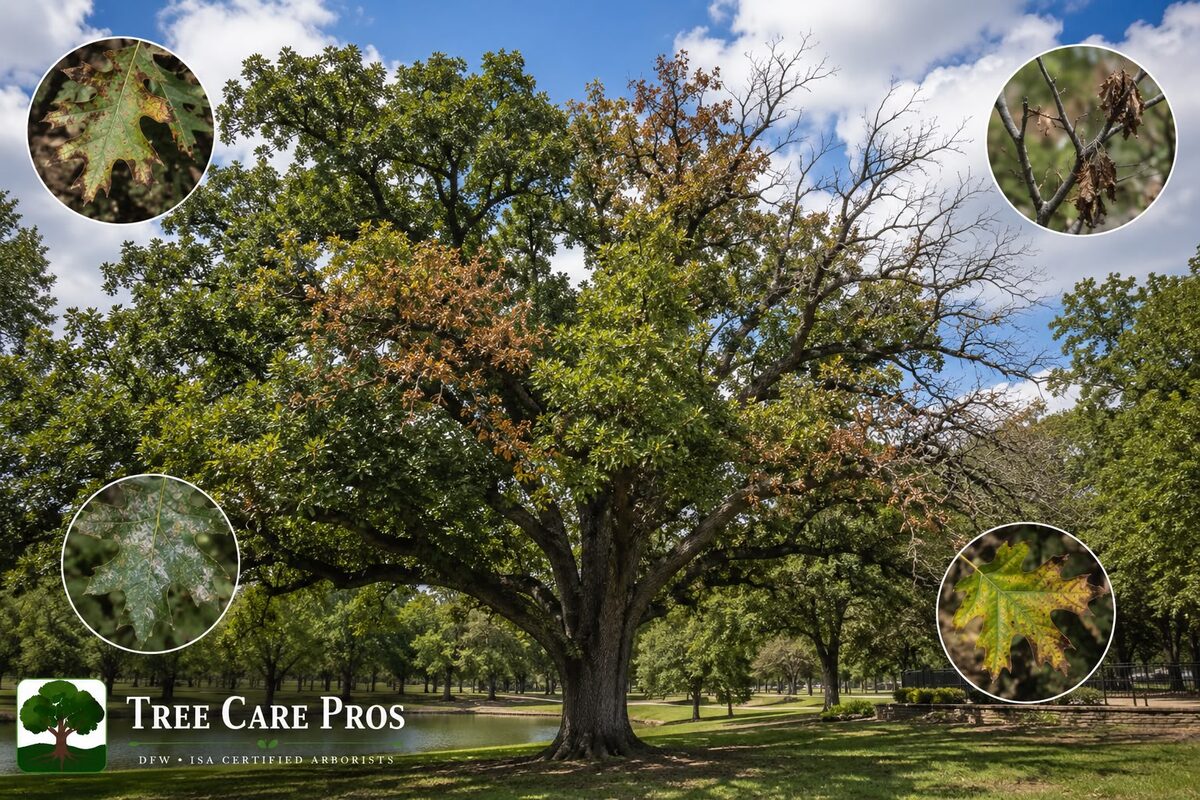
In susceptible hosts, infections may result in extensive bark lesions, vascular disruption, canopy decline, and eventual mortality.
Common symptoms include:
- Bark cankers
- Dark sap bleeding
- Leaf blight
- Twig dieback
- Canopy thinning
- Premature leaf drop
- Progressive decline
- Branch mortality
- Tree death in severe cases
Although the disease is not commonly encountered in North Texas, awareness remains important because of plant movement and nursery introductions.
Why Sudden Oak Death Receives Attention Throughout the Arboricultural Industry
Sudden Oak Death has become a major concern among arborists because of its destructive potential and ability to spread through infected plant material.
The disease has affected millions of trees in regions where the pathogen has become established.
Throughout Dallas-Fort Worth, ISA Certified Arborists monitor for symptoms that may resemble Sudden Oak Death while also evaluating more common regional diseases such as:
- Oak Wilt
- Phytophthora Root Rot
- Ganoderma Root Rot
- Bacterial Leaf Scorch
- Hypoxylon Canker
- Anthracnose
Proper identification is essential because management strategies differ substantially depending upon the pathogen involved.
The most common contributing factors associated with disease susceptibility include:
- Excessive moisture
- Poor drainage
- Environmental stress
- Root dysfunction
- Soil compaction
- Construction impacts
- Nutrient deficiencies
- Drought stress
- Improper planting practices
- Chronic decline
Healthy trees generally demonstrate greater resilience than stressed trees.
Diagnosis by an ISA Certified Arborist
Proper diagnosis is critical because Sudden Oak Death symptoms may resemble several other diseases commonly encountered throughout North Texas.
An ISA Certified Arborist evaluates the entire tree system before making recommendations.
During a professional evaluation, Tree Care Pros commonly assesses:
- Oak species
- Bark condition
- Canker development
- Bleeding lesions
- Root flare condition
- Soil compaction
- Drainage conditions
- Environmental stress factors
- Tree vigor
- Canopy density
Laboratory testing is often necessary to confirm the presence of Phytophthora ramorum.
Visual symptoms alone are not sufficient for a definitive diagnosis.
Accurate identification helps ensure that treatment efforts are directed toward the actual problem.
Disease Progression and Long-Term Effects
The progression of Sudden Oak Death varies depending upon species susceptibility, environmental conditions, and pathogen activity.
As infections expand, bark tissues and vascular systems may become compromised.
Reduced water transport can eventually affect canopy development, photosynthesis, and overall tree vigor.
Typical progression includes:
- Initial infection
- Bark lesion development
- Canker expansion
- Reduced vascular function
- Canopy thinning
- Branch dieback
- Reduced vigor
- Progressive decline
- Potential mortality
Early detection often improves management opportunities.
Texas A&M Recommended Management Strategies
Management recommendations supported by university research emphasize prevention, sanitation, environmental management, and maintaining healthy tree vigor.
Management commonly focuses on:
- Proper diagnosis
- Monitoring
- Disease exclusion
- Sanitation practices
- Root health improvement
- Drainage correction
- Stress reduction
- Long-term Plant Healthcare
Reducing environmental stress often improves overall tree resilience and supports healthier root systems.
Tree Care Pros Plant Healthcare Treatment Protocol
Although Sudden Oak Death is not among the most commonly diagnosed diseases in North Texas, the same Plant Healthcare principles used for disease management remain valuable for maintaining healthy trees.
Deep Root Fertilization
Deep root fertilization supports nutrient uptake, root development, and canopy performance.
Healthy root systems contribute to improved vigor and stress tolerance.
Micronutrient Applications
Balanced nutrition supports:
- Photosynthesis
- Root growth
- Energy production
- Stress tolerance
Programs may include:
- Iron
- Zinc
- Manganese
- Magnesium
- Trace elements
Proper nutrition supports overall tree performance.
Soil Aeration
Compacted soils frequently contribute to root dysfunction.
Soil aeration improves:
- Root respiration
- Oxygen exchange
- Water infiltration
- Nutrient movement
- Root development
Healthy roots support healthier canopies.
Root Flare Excavation
Root flare excavation improves gas exchange and helps reduce chronic root stress.
Benefits may include:
- Improved oxygen movement
- Better nutrient uptake
- Enhanced root function
- Reduced stress
Proper root flare development contributes to long-term tree health.
Biological Soil Enhancement
Healthy soils support beneficial microbial populations that contribute to nutrient cycling and root development.
Benefits may include:
- Improved soil structure
- Enhanced nutrient availability
- Increased root growth
- Better stress tolerance
Supporting soil biology remains a cornerstone of Plant Healthcare.
Integrated Pest Management (IPM)
Trees weakened by disease often become vulnerable to secondary insect pressure.
IPM programs help reduce additional stress associated with:
- Borers
- Scale insects
- Aphids
- Secondary pests
Reducing pest pressure supports long-term preservation efforts.
Disease Monitoring and Preservation Programs
Ongoing monitoring programs help identify changes in tree condition and provide opportunities for early intervention.
High-value trees often benefit from regular evaluations and customized preservation strategies.
Why Soil Health Matters
Healthy trees begin below ground.
Root systems provide the foundation for water uptake, nutrient absorption, stress tolerance, and long-term vigor.
Healthy soils support:
- Root respiration
- Oxygen exchange
- Nutrient cycling
- Beneficial microorganisms
- Water movement
- Root development
Healthy soils help promote:
- Strong root systems
- Better nutrient uptake
- Increased stress tolerance
- Enhanced canopy density
- Greater disease resistance
- Long-term tree health
Supporting root health remains one of the most important aspects of disease prevention.