Bacterial Leaf Scorch is a systemic vascular disease caused by the bacterium Xylella fastidiosa.
Unlike many fungal leaf diseases that remain on the surface of foliage, this pathogen colonizes the xylem tissue responsible for transporting water throughout the tree.
As bacterial populations increase, portions of the vascular system become restricted. Water movement becomes less efficient, and foliage begins to exhibit symptoms associated with moisture stress even when adequate soil moisture is present.
The disease typically progresses slowly over multiple years. Many trees survive for extended periods while experiencing gradual decline, making early diagnosis especially important.
Affected trees often continue producing new foliage each spring, creating the appearance of recovery. However, symptoms commonly return during periods of heat and environmental stress because the underlying vascular problem remains active.
Common symptoms include:
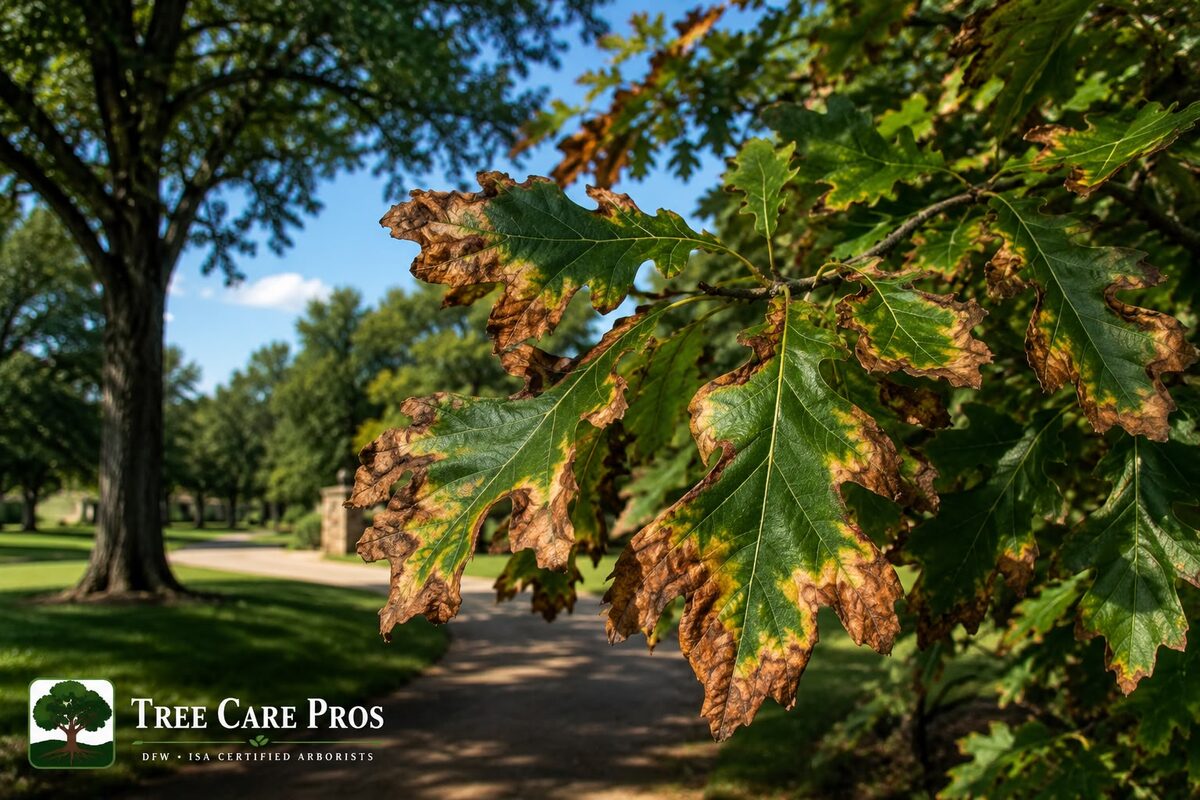
- Marginal leaf scorch
- Brown leaf edges
- Yellow halos around necrotic tissue
- Premature leaf drop
- Sparse canopy development
- Progressive branch dieback
- Reduced annual growth
- Chronic decline
- Thinning foliage
The disease often becomes more apparent during summer when water demand is highest.