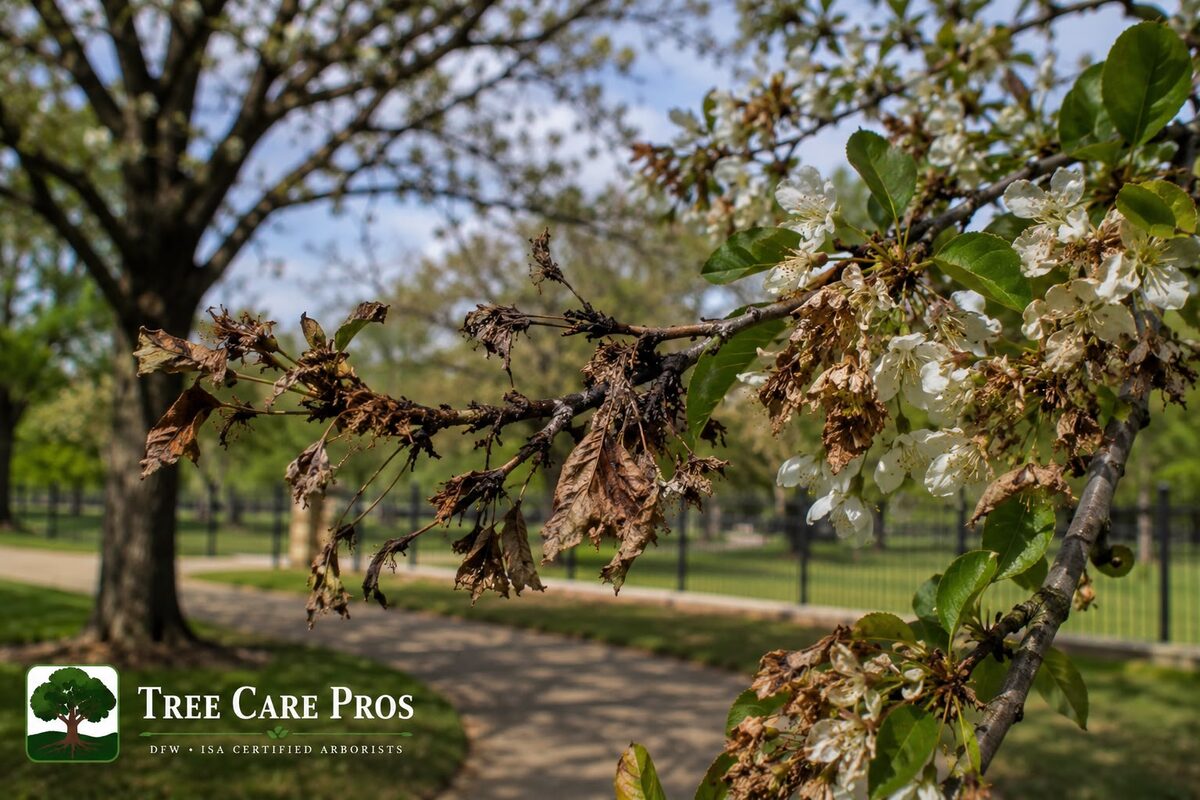
Brown Rot (Blossom & Twig) Treatment in Dallas-Fort Worth, Texas
Brown rot is a category of wood-decay fungi that primarily consume cellulose and hemicellulose within woody tissues.
What Is Brown Rot?
Brown rot is a category of wood-decay fungi that primarily consume cellulose and hemicellulose within woody tissues. As these compounds are removed, the remaining wood becomes brittle and structurally compromised.
Unlike healthy wood that remains flexible and strong, brown rot affected wood often fractures into small cube-like pieces. This condition is commonly referred to as cubical brown rot because of the distinctive cracking pattern produced during advanced decay.
As decay progresses, the structural capacity of the tree declines. Branches, scaffold limbs, trunks, and root systems may lose significant strength long before external symptoms become obvious.
Brown rot fungi commonly develop within:
- Trunks
- Scaffold branches
- Root systems
- Pruning wounds
- Storm-damaged wood
- Construction injuries
- Cavities
Common symptoms include:
- Wood decay
- Cavities
- Hollow sections
- Fruiting bodies
- Structural weakness
- Branch failures
- Trunk cracking
- Cubical wood decay
- Progressive decline
Why Brown Rot Is Common in North Texas
Trees throughout North Texas are frequently exposed to conditions that increase susceptibility to wood decay fungi.
Extended drought cycles followed by heavy rainfall create stress conditions that weaken natural defense systems. Construction activities, pruning wounds, storm injuries, root damage, and environmental stress provide opportunities for fungal colonization.
Urban trees often experience repeated injuries throughout their lifespan. Each injury creates a potential entry point for decay organisms.
The warm climate of Dallas-Fort Worth also supports fungal development and long-term colonization of wounded tissues.
The most common contributing factors include:
- Pruning wounds
- Storm damage
- Construction injuries
- Root damage
- Drought stress
- Environmental decline
- Mechanical injury
- Soil compaction
- Poor tree vigor
- Aging trees
Many trees develop brown rot only after years of accumulated stress and injury.
Diagnosis by an ISA Certified Arborist
Brown rot diagnosis requires more than simply identifying fungal growth.
An ISA Certified Arborist evaluates the extent of decay, structural implications, likelihood of failure, and overall health of the tree before making management recommendations.
During a professional evaluation, Tree Care Pros commonly assesses:
- Tree species
- Decay location
- Structural defects
- Cavities
- Root condition
- Trunk integrity
- Scaffold branch attachments
- Soil conditions
- Site targets
- Overall tree vigor
The objective is to determine whether preservation, mitigation, monitoring, or removal represents the most appropriate course of action.
In some cases, advanced diagnostic tools may be utilized to evaluate internal wood conditions and estimate the extent of structural compromise.
How Brown Rot Affects Tree Structure
One of the most important aspects of brown rot is its effect on structural integrity.
Because cellulose contributes significantly to wood strength, its removal dramatically weakens the affected tissues.
As decay progresses, the tree may lose its ability to withstand:
- Wind loading
- Canopy weight
- Ice accumulation
- Storm events
- Mechanical stress
Typical progression includes:
- Initial fungal colonization
- Internal wood decay
- Loss of cellulose
- Structural weakening
- Crack development
- Branch failures
- Trunk instability
- Root decline
- Increased failure potential
This progression often occurs slowly over many years.
Tree Risk Assessment and Brown Rot
Brown rot frequently becomes a tree risk assessment issue.
The presence of decay does not automatically require removal. However, the location, severity, and extent of decay must be evaluated carefully.
Tree Care Pros utilizes accepted arboricultural risk assessment principles when evaluating decayrelated concerns.
Factors commonly considered include:
- Probability of failure
- Impact targets
- Consequences of failure
- Structural defects
- Decay location
- Tree health
- Occupancy levels
Many trees with limited decay can continue providing value when properly managed.
Texas A&M Recommended Management Strategies
Texas A&M and accepted arboricultural practices emphasize preserving healthy trees whenever possible while maintaining public safety.
Management recommendations often focus on:
- Improving tree vigor
- Reducing environmental stress
- Structural pruning
- Monitoring decay progression
- Supporting root health
- Risk mitigation
Because brown rot is a structural disease rather than a foliar disease, treatment strategies are often different from those used for nutrient deficiencies or insect infestations.
Long-term monitoring frequently becomes an important component of management.
Tree Care Pros Plant Healthcare Treatment Protocol
Although existing decay cannot typically be reversed, Plant Healthcare programs can often help improve tree vigor and support long-term preservation efforts.
Deep Root Fertilization
Deep root fertilization supports nutrient uptake and root function.
Improved vigor helps trees compartmentalize injuries more effectively and maintain healthy growth around affected areas.
Micronutrient Applications
Micronutrients support:
- Photosynthesis
- Energy production
- Root growth
- Stress tolerance
Balanced nutrition contributes to overall tree health.
Soil Aeration
Compacted soils frequently contribute to chronic stress.
Soil aeration improves:
- Oxygen exchange
- Root respiration
- Nutrient uptake
- Water infiltration
- Root development
Reducing stress often improves the tree’s ability to manage existing defects.
Root Flare Excavation
Root flare excavation improves gas exchange and helps identify potential root-related concerns.
Benefits include:
- Improved root health
- Reduced stress
- Better oxygen movement
- Improved root function
Healthy roots support healthier canopies.
Biological Soil Enhancement
Healthy soils support beneficial microbial activity that contributes to nutrient cycling and root development.
Benefits may include:
- Improved soil structure
- Better nutrient availability
- Enhanced root growth
- Increased stress tolerance
Integrated Pest Management (IPM)
Trees affected by decay often become susceptible to secondary pest pressure.
IPM programs help reduce additional stress associated with insect infestations.
Structural Pruning and Risk Reduction
Structural pruning is often one of the most valuable management tools available for trees affected by brown rot.
Pruning may help:
- Reduce canopy weight
- Lower loading forces
- Improve structural balance
- Reduce failure potential
All pruning recommendations should follow ANSI A300 standards.
Why Soil Health Matters
Healthy trees begin below ground.
The ability of a tree to compartmentalize wounds and manage decay is heavily influenced by overall vigor and root health.
Healthy soils support:
- Root respiration
- Nutrient cycling
- Oxygen exchange
- Water movement
- Beneficial microorganisms
- Root development
Healthy soils help promote:
- Strong root systems
- Improved canopy density
- Better stress tolerance
- Enhanced vigor
- Long-term health
Supporting root health is often one of the most important components of preserving trees affected by decay.